
Bone Broth vs Collagen: Does Bone Broth Have Collagen?
Yes, bone broth has collagen, but how much depends on how it was made. A plain comparison of bone broth and collagen supplements, with the research linked.

In this guide
- Bone broth vs collagen at a glance
- Does bone broth have collagen?
- Where bone broth powder fits
- Gelatin and collagen peptides: does the form matter?
- What the research says, and what it does not
- What about the minerals?
- Do you need collagen if you drink bone broth?
- Bone broth powder or collagen powder: how to choose
- How we use it
- Common questions
- Sources
Yes, bone broth has collagen. When bones and connective tissue simmer for hours, their collagen breaks down into gelatin, and that gelatin is most of the protein in the broth. A collagen supplement is the same protein taken a step further: extracted, usually from cattle hides or fish skin, and broken into small pieces called peptides.
The short version
- Bone broth holds its collagen as gelatin. A supplement holds it as peptides.
- A scoop of collagen is a fixed dose. Broth varies, so read the protein on the label.
- Most human trials used collagen peptides, not broth.
- A concentrated broth can match a supplement. Our powder has 12g of collagen in a 15g serving.
The real difference is how much you get. A scoop of collagen powder is a measured dose. A bone broth can hold a lot of collagen or very little, depending on how it was made, so the protein figure on the label tells you more than the name on the front.
Bone broth vs collagen at a glance
| Bone broth | Collagen supplement | |
|---|---|---|
| What it is | Bones and connective tissue simmered in water for hours, then drunk, cooked with or dried into powder | Collagen extracted from hides, bones or fish skin and broken down into peptides |
| Form of the collagen | Gelatin, which is cooked collagen | Hydrolysed collagen peptides |
| Collagen per serving | Depends on the recipe, so check the protein on the label. reGrounded powder has 12g in a 15g serving | Fixed by the scoop and stated on the label |
| What else is in it | The other amino acids from the broth and very small amounts of minerals | Nothing else, unless it has been added |
| Taste | Savoury. Unflavoured powder is mild | Neutral |
| Human trials | Very few on broth itself | Most collagen research has used peptides |
| Suits | People who want a food to drink or cook with | People who want a measured dose with no taste |
Does bone broth have collagen?
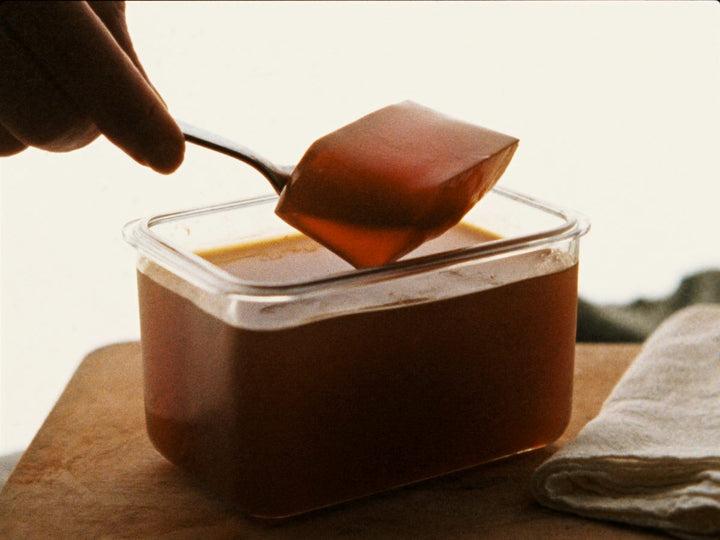
It does, though not in the form it had in the animal. Collagen is the tough protein that holds bone, cartilage, skin and tendon together. Long, slow cooking unwinds it into gelatin, which dissolves into the water. That is why a good broth sets to a jelly in the fridge.
How much ends up in the mug is another matter. In 2019, researchers at the Australian Institute of Sport analysed home-made and shop-bought bone broths for the amino acids that collagen is built from. Broths made to a standard recipe contained significantly less glycine, proline and hydroxyproline than a 20g dose of collagen supplement, and the amounts varied widely from one recipe to the next. Their conclusion was that bone broth is unlikely to be a consistently reliable source of those amino acids (Alcock and colleagues, 2019).
What to check. The words "bone broth" on a carton promise very little. Look at the protein per serving instead. Most of the protein in a plain bone broth comes from collagen, so a broth with 2g of protein in a mug cannot be giving you much of it.
Where bone broth powder fits
Drying a broth takes the water out and leaves the protein behind, which is why a powder can be far more concentrated than a liquid. Ours is the example we can give exact numbers for. A 15g serving of reGrounded bone broth powder has 14.3g of protein, of which 12g is collagen, with 3.1g of glycine, 1.8g of proline and 1.5g of hydroxyproline.
In one 15g serving of reGrounded bone broth powder.
That is in the same range as the amounts used in the collagen trials below, where daily doses ran from 2.5g to 15g. It is not the thin broth the 2019 study was warning about. It is also not a promise about every powder. Some are bulked out with flavourings, starches or salt, so read the protein line on any label before you buy.
Gelatin and collagen peptides: does the form matter?
Collagen peptides are gelatin that has been broken down further. They dissolve in cold drinks and do not set. Gelatin needs warmth to dissolve and gels as it cools. Your gut breaks both down into amino acids and short peptides before they are absorbed.
One small trial suggests the cooked form still does something. Eight men who took 15g of gelatin with vitamin C an hour before skipping exercise had higher blood levels of glycine, proline and hydroxyproline, and a blood marker of collagen formation doubled (Shaw and colleagues, 2017). Eight people is a very small study, but it is the closest thing we have found to a test of the form of collagen that broth provides.
What the research says, and what it does not
Most human trials have used collagen peptides, not broth.
- Skin. A 2021 review pooled 19 randomised trials with 1,125 participants. Hydrolysed collagen taken for 90 days improved skin hydration, elasticity and wrinkles compared with placebo (de Miranda and colleagues, 2021).
- Joints. A 24-week trial recruited 147 athletes. Those taking 10g of collagen hydrolysate a day reported less activity-related joint pain than those taking a placebo (Clark and colleagues, 2008).
We have not found a trial that tests bone broth itself in the same way. If you want the product with the most direct evidence behind it, that is a collagen peptide supplement. If you want collagen as part of a food you drink or cook with, that is broth, and you should choose one that tells you how much protein is in it.
Glycine is worth a mention on its own. Roughly every third amino acid in collagen is glycine. One metabolic analysis estimated that the body makes about 3g a day and gets 1.5g to 3g from a typical diet, which the authors argue is well short of what it could use (Meléndez-Hevia and colleagues, 2009). That paper is a calculation, not a trial. For scale, a serving of our powder has 3.1g.
What about the minerals?
Bone broth is often described as rich in calcium and magnesium. The measurements say otherwise. A 2017 study that tested home-made and commercial broths found calcium and magnesium at less than 5% of the daily recommended amount per serving. The same study found lead and cadmium at minimal levels, a few micrograms per serving (Hsu and colleagues, 2017).
Drink bone broth for the protein and the collagen. Get your minerals elsewhere.
Do you need collagen if you drink bone broth?
Probably not both. If your broth gives you 10g or more of collagen a serving, a scoop of collagen powder on top adds more of the same amino acids. If your broth is a carton with a couple of grams of protein, it is closer to a stock, and a supplement or a stronger broth would add far more.
Bone broth powder or collagen powder: how to choose
Collagen powder suits you if
- You want something with no taste that dissolves in cold drinks
- You want the type of product most trials have used
- You do not eat beef and want a marine source
Bone broth powder suits you if
- You would rather have a food than a supplement
- You like a warm savoury drink
- You want to cook with it. Stirred into soup, rice or gravy it does a job collagen powder cannot
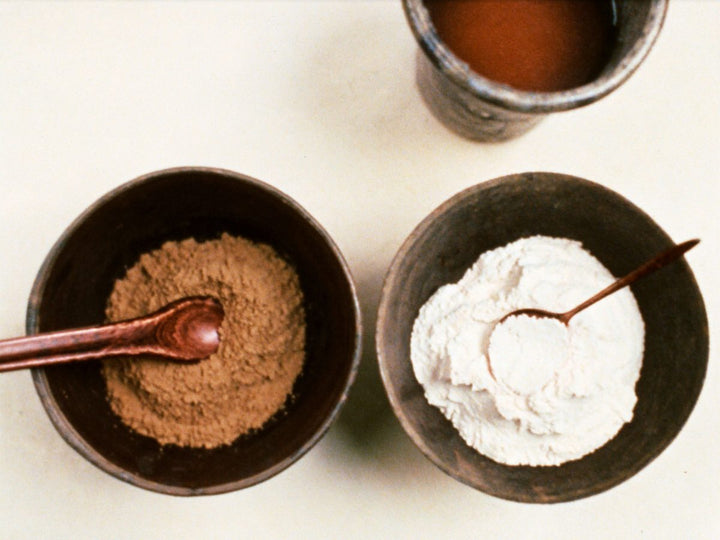
Whichever you pick, check three things: the protein or collagen per serving, the ingredient list, and any certification you need. Collagen and gelatin can come from pork as well as beef, so if halal matters to you, look for certification on either product. Ours is a halal certified bone broth powder with two ingredients: grass-fed beef bone broth and hyaluronic acid.
How we use it

One 15g serving a day, which is three 5g scoops. Put the powder in the mug first, pour warm water over it, stir, leave it thirty seconds and stir again. It is unflavoured, so it also goes into coffee, soup, stew or rice without changing the taste. A pouch is £35 for 20 servings, which is £1.75 a serving.
You can read more in our bone broth powder guide or go straight to the grass-fed beef bone broth powder.
Common questions
Is bone broth better than collagen?
Neither is better in general. Collagen peptides have more trial evidence and a fixed dose. Bone broth is a food, and a concentrated one can supply a similar amount of collagen. The useful comparison is grams of collagen per serving and which one you will actually take every day.
How much collagen is in bone broth?
It varies with the bones, the recipe and the cooking time, and most cartons do not say. Use the protein per serving as your guide. Our powder has 12g of collagen in a 15g serving.
Is bone broth protein the same as collagen?
Mostly. The protein in bone broth is largely gelatin, which is cooked collagen, along with smaller amounts of other amino acids from the bones.
Can I take bone broth and collagen together?
Yes. They supply the same family of amino acids, so together they simply add up to a larger amount.
Sources
- Alcock RD, Shaw GC, Burke LM. Bone broth unlikely to provide reliable concentrations of collagen precursors compared with supplemental sources of collagen used in collagen research. Int J Sport Nutr Exerc Metab. 2019;29(3):265-272. PubMed
- Shaw G, Lee-Barthel A, Ross ML, Wang B, Baar K. Vitamin C-enriched gelatin supplementation before intermittent activity augments collagen synthesis. Am J Clin Nutr. 2017;105(1):136-143. PubMed
- de Miranda RB, Weimer P, Rossi RC. Effects of hydrolyzed collagen supplementation on skin aging: a systematic review and meta-analysis. Int J Dermatol. 2021;60(12):1449-1461. PubMed
- Clark KL and others. 24-week study on the use of collagen hydrolysate as a dietary supplement in athletes with activity-related joint pain. Curr Med Res Opin. 2008;24(5):1485-1496. PubMed
- Meléndez-Hevia E and others. A weak link in metabolism: the metabolic capacity for glycine biosynthesis does not satisfy the need for collagen synthesis. J Biosci. 2009;34(6):853-872. PubMed
- Hsu DJ, Lee CW, Tsai WC, Chien YC. Essential and toxic metals in animal bone broths. Food Nutr Res. 2017;61(1):1347478. PubMed
This article is general information and not medical advice.
Kristian started reGrounded to make nutrition the way people ate before supplements: real food, short labels and nothing added to hide a problem. He writes these guides to set out what goes into each product and what the research does and does not show.


