
Beef Liver Capsules: What Is in Them, Benefits and Who Should Avoid Them
Beef liver capsules are dried liver in a capsule. Here is what one actually gives you, how much vitamin A is too much, and who should avoid them.

In this guide
Beef liver capsules are dried beef liver in a capsule: a way to get some of what liver offers, mainly vitamin B12, vitamin A and copper, without cooking or tasting it. Each capsule holds a small amount, so the useful question is not whether liver is nutritious (it is) but how much a capsule actually gives you, and how much vitamin A is too much.
The short version
- Liver is one of the richest foods there is for vitamin B12, vitamin A and copper.
- A 1,000mg capsule of freeze-dried liver holds the dry matter of roughly 3 to 4g of fresh liver.
- That is a meaningful amount of B12, a moderate amount of vitamin A and copper, and very little iron or protein.
- The NHS advises against liver in pregnancy, and against liver more than once a week alongside vitamin A supplements.
- Freeze-drying uses low temperatures, which is gentler on heat-sensitive vitamins. Look for no fillers and a clear label.
We sell beef liver capsules, so we have a reason to make them sound like more than they are. This guide sets out what is in liver, what a capsule supplies, who should not take them and what to check on a label.
What beef liver capsules are
Fresh beef liver is about 71% water (USDA FoodData Central). Take the water out and what is left, the protein, vitamins and minerals, is ground and put into capsules. That is all a beef liver capsule is. There is no extraction and nothing is concentrated beyond removing the water.
The method of drying matters. Freeze-drying removes water at low temperature under vacuum, while cheaper methods use heat, which can damage heat-sensitive vitamins. Ours are freeze-dried grass-fed beef liver, 1,000mg a capsule, with no fillers or binders.
What is in beef liver
Per 100g, raw beef liver has about 20g of protein and 135 calories. Its real strength is a handful of vitamins and minerals that it holds in very large amounts (USDA FoodData Central).
In 100g of raw beef liver. Source: USDA FoodData Central.
For scale, the NHS says adults need about 1.5µg of vitamin B12 a day, 600 to 700µg of vitamin A and 1.2mg of copper. A 100g portion of liver gives you around 40 days of B12, about seven days of vitamin A and eight of copper. It also has riboflavin (vitamin B2) and choline.
What a 1,000mg capsule gives you
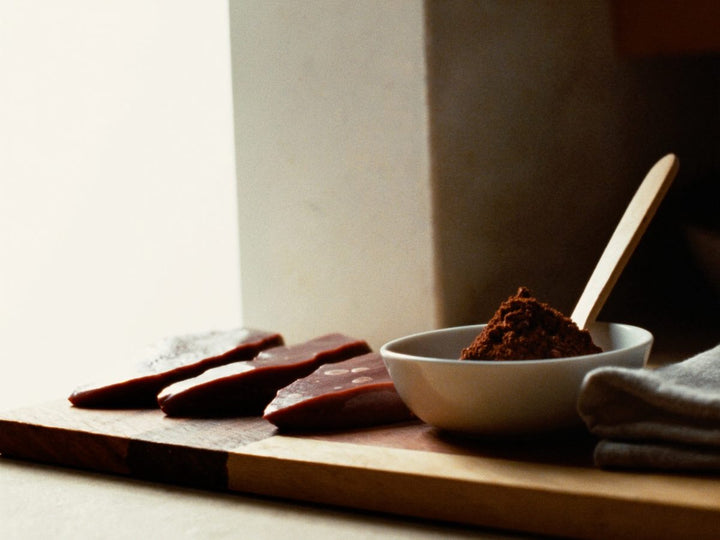
Because a capsule is liver without the water, you can estimate what is in it. One gram of freeze-dried liver comes from roughly 3.4g of fresh liver. The table uses that figure and the USDA values. Treat it as a guide: liver varies from animal to animal, and a little is lost in drying.
| 100g fresh liver | One 1,000mg capsule (estimate) | Adult daily need (NHS) | |
|---|---|---|---|
| Vitamin B12 | 59µg | About 2µg | 1.5µg |
| Vitamin A | 4,968µg | About 170µg | 600µg (women), 700µg (men) |
| Copper | 9.8mg | About 0.3mg | 1.2mg |
| Iron | 4.9mg | About 0.2mg | 8.7mg (men), 14.8mg (women aged 19 to 49) |
| Protein | 20g | About 0.7g | Varies with body weight |
What this means. A capsule is a reliable source of vitamin B12 and a moderate source of vitamin A and copper. It is not a meaningful source of iron or protein. If you are taking liver capsules for iron, a capsule supplies only a small fraction of what you need, so talk to your GP if you think you are low.
What the nutrients in liver do
The benefits of liver are the benefits of its nutrients, at the amounts it supplies them. The NHS describes their roles like this:
Vitamin B12
Helps the body make red blood cells, keep the nervous system healthy and release energy from food (NHS). It is found naturally only in animal foods, so liver is one of the most concentrated sources there is.
Vitamin A
Supports the immune system, vision in dim light and healthy skin (NHS). Liver holds it as retinol, the form the body uses directly.
Copper
Helps produce red and white blood cells and release iron to form haemoglobin (NHS).
Folate and riboflavin
Folate helps the body form healthy red blood cells. Riboflavin keeps skin, eyes and the nervous system healthy and helps release energy from food (NHS).
Most people in the UK who eat meat, fish and dairy already get enough of these. Liver capsules make most sense if you eat little red meat, or if you like the idea of liver but not the taste.
How much vitamin A is too much
Vitamin A is the one nutrient in liver where more is not better. The body stores it, and the NHS advises:
- Do not eat liver or liver products, such as pate, more than once a week.
- If you eat liver every week, do not take supplements that contain vitamin A.
- Women who have been through the menopause and older men should have no more than 1.5mg (1,500µg) of vitamin A a day from food and supplements, because of the risk to bone.
Source: NHS, vitamin A.
On our estimate of about 170µg a capsule, 1.5mg is roughly the vitamin A in nine 1,000mg capsules, before counting any from food or other supplements. That is why it is worth checking how many capsules make up the serving on the label, and adding up any multivitamin or fish liver oil you take as well.
Who should not take liver capsules
Pregnancy. The NHS advises avoiding liver and foods containing liver while pregnant, because their high vitamin A content can harm the baby (NHS). That includes liver capsules. If you are trying to conceive, ask your GP or midwife first.
- If you already take vitamin A in a multivitamin or fish liver oil, add up the total before adding liver.
- If you eat liver or pate most weeks, capsules on top take you past the NHS guidance.
- If you have a condition affecting copper or iron levels, or take prescribed medicines, check with your GP or pharmacist first.
How to choose beef liver capsules
- Grass-fed beef The label should say where the liver comes from and how the cattle were raised.
- Freeze-dried Low-temperature drying protects heat-sensitive vitamins. If a label does not say how the liver was dried, ask.
- Nothing else in the capsule Look for liver and the capsule shell, with no fillers, binders or flow agents.
- The amount per capsule 1,000mg a capsule means fewer capsules for the same amount of liver than 500mg or 750mg.
- Any certification you need Ours are halal certified.
Capsules or fresh liver?
| Fresh liver | Freeze-dried capsules | |
|---|---|---|
| Amount | A 100g portion is a lot of liver in one go | Small, steady amounts |
| Taste | Strong, and not for everyone | None |
| Preparation | Needs buying fresh and cooking | Nothing |
| Vitamin A | Very high per portion, so once a week at most | Moderate per capsule, so count your total |
| Cost | Cheap per gram | More per gram, for the convenience |
If you enjoy liver and onions once a week, you do not need capsules as well. Capsules suit people who want some of what liver offers without eating it.
Grass-fed beef liver capsules Freeze-dried grass-fed beef liver, 1,000mg a capsule, with no fillers or binders. Halal certified, with free UK delivery.
Common questions
Are beef liver capsules good for you?
They are a convenient source of vitamin B12, and a moderate source of vitamin A and copper. They are not a meaningful source of iron or protein at one or two capsules. Whether you need them depends on what you already eat.
Are beef liver capsules safe?
For most adults, at the amounts on the label, yes. The main thing to watch is total vitamin A. The NHS advises against liver in pregnancy, and against liver every week alongside other vitamin A supplements.
Do liver capsules contain much iron?
Not per capsule. Fresh liver has 4.9mg of iron per 100g, but a 1,000mg capsule comes from only about 3 to 4g of fresh liver, so it holds roughly 0.2mg.
What does freeze-dried mean?
The liver is frozen and the water is removed under vacuum at low temperature, instead of being dried with heat, which is gentler on heat-sensitive vitamins.
When should I take them?
With food is easiest, at any time of day. Follow the serving on the label.
Can I take liver capsules with bone broth?
Yes. They do different jobs: bone broth is mostly protein and collagen, and liver capsules are mostly vitamins and minerals. See is bone broth good for you?
Sources
- US Department of Agriculture, FoodData Central. Beef, variety meats and by-products, liver, raw (FDC ID 169451). FoodData Central
- NHS. Vitamin A. nhs.uk
- NHS. B vitamins and folic acid. nhs.uk
- NHS. Others (including copper). nhs.uk
- NHS. Iron. nhs.uk
- NHS. Foods to avoid in pregnancy. nhs.uk
This article is general information and not medical advice.
Kristian started reGrounded to make nutrition the way people ate before supplements: real food, short labels and nothing added to hide a problem. He writes these guides to set out what goes into each product and what the research does and does not show.


